Beyond the Badge: Trauma Therapy & CBT for First Responders

First responders are trained to step into situations most people instinctively avoid. Police officers, firefighters, paramedics, dispatchers, and other emergency personnel routinely encounter accidents, violence, loss, uncertainty, and high-pressure decisions.
Being resilient is part of the job. But resilience doesn't mean being unaffected by what you see, hear, and experience.
Repeated exposure to traumatic events and occupational stress can take a toll over time. For some first responders, that may contribute to anxiety, sleep difficulties, irritability, relationship challenges, substance use, burnout, trauma-related symptoms, or post-traumatic stress disorder (PTSD).
At Peace of Mind Cognitive Behavioural Therapy (CBT) in Burlington, Ontario, Registered Psychotherapist Alison Pereira provides trauma-informed mental health support designed with the realities of first responder culture in mind.
First Responder Mental Health: When the Job Is More Than a Living
For many first responders, the work is more than a job. It's a calling.
That calling can bring unpredictable schedules, long shifts, missed holidays, intense responsibility, and exposure to some of the best and worst moments in people's lives, sometimes in the same shift.
Police officers, paramedics, firefighters, and other emergency personnel may repeatedly encounter traumatic events throughout their careers. Historically, many first responders were expected to simply shake it off, push through, and get back to work.
We now understand that mental health deserves the same attention as physical health.
First responders can be extraordinarily capable and resilient while still being affected by the cumulative weight of their experiences. Trauma exposure can contribute to mental health concerns, including PTSD, and some individuals may turn to unhealthy coping mechanisms when symptoms aren't addressed.
The question isn't whether first responders are tough enough.
It's whether we're providing mental health support that understands the people doing these difficult jobs.
Why Can It Be Difficult for First Responders to Seek Mental Health Support?
Burning buildings. Crimes in progress. Medical emergencies. Motor vehicle collisions. Sudden deaths.
These experiences can have emotional and physical consequences not only for the people directly involved, but also for the professionals responding to them.
Yet asking for help isn't always easy.
First responders may worry that a therapist won't understand the realities of the job. Others may feel uncomfortable talking openly about their experiences or believe that needing support conflicts with the resilience expected within their profession.
Time can also be a significant barrier. Shift work, overtime, family responsibilities, and unpredictable schedules don't always fit neatly into conventional mental health care.
But resilience and mental health support aren't opposites.

Meet Alison Pereira: A Therapist Who Understands First Responder Culture
Alison Pereira is a Registered Psychotherapist and CBT clinician with more than 25 years of experience and a Master of Arts in Counselling Psychology.
Alison has shaped her career around supporting first responders, people who work alongside them in supportive roles, and their families.
Her approach combines professional mental health training with an understanding of first responder culture, which can be particularly important when building trust between a therapist and a first responder.
Specialized Experience Supporting First Responders
Over the course of her career, Alison has developed an understanding of first responder culture, particularly in policing, and has completed specialized training for professionals who work with first responders.
This includes training through the FBI National Academy Associates (FBINAA) program addressing effective coping strategies for managing the stresses associated with law enforcement.
Alison also has extensive training in the treatment of PTSD and complex trauma in first responders.
For clients, that means less time explaining the culture surrounding the job and more time focusing on the challenges that brought them to therapy.
What Is Trauma-Informed Therapy for First Responders?
First responder therapy should recognize that occupational stress isn't always tied to one dramatic incident.
For some people, a specific event may continue to affect them. For others, it can be the cumulative effect of years spent responding to emergencies, witnessing trauma, managing high-pressure situations, and staying composed while others experience their worst moments.
Trauma-informed therapy creates an environment where people can discuss these experiences without judgment.
Rather than assuming every first responder needs the same type of support, therapy should consider the individual's experiences, symptoms, coping strategies, work environment, relationships, and goals.
That support may include Cognitive Behavioural Therapy (CBT) and other trauma-informed strategies appropriate to the individual.
How Can CBT Help First Responders?
Cognitive Behavioural Therapy, commonly known as CBT, explores the relationship between thoughts, emotions, and behaviours.
For first responders experiencing occupational stress or trauma-related difficulties, CBT can provide practical strategies for recognizing unhelpful patterns and developing healthier ways of responding to difficult thoughts, emotions, and situations.
Depending on the individual's needs, therapy may help address concerns related to:
● Trauma and PTSD
● Anxiety and persistent worry
● Stress and emotional overload
● Difficult thoughts or memories
● Avoidance behaviours
● Sleep difficulties
● Changes in mood
● Work and relationship challenges
● Unhelpful coping patterns
For first responders who value practical, straightforward strategies, CBT can offer a structured approach to understanding what's happening and building tools they can apply outside the therapy room.
Making First Responder Mental Health Support More Approachable
Mental health support doesn't always have to begin after someone reaches a crisis point.
Creating opportunities for earlier, more informal conversations can help make psychological wellness a normal part of first responder health.
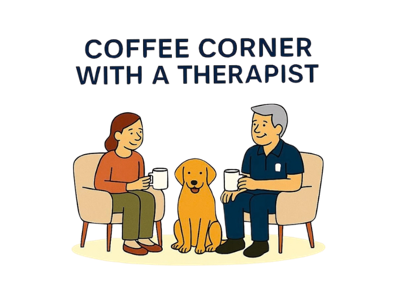
That's one of the ideas behind Coffee Corner With a Therapist.
What Is Coffee Corner With a Therapist?
Developed by Alison Pereira, Coffee Corner With a Therapist is an approachable mental health initiative designed specifically for first responders.
The concept is simple: create a welcoming, consistent, dedicated space where first responders can have conversations about mental health without the formality of a traditional therapy appointment.
It's intended to provide a stigma-free environment where people can participate at their own pace and comfort level.
Coffee Corner Can Provide:
● An informal and confidential wellness space
● Regular opportunities for stigma-free conversations
● Opportunities to build rapport with new recruits and experienced professionals
● Greater familiarity with ongoing mental health care
● Positive connections with mental health professionals before a crisis occurs
● Information about accessing additional psychological services and supports when needed
The goal isn't to force people to talk; it's to make support accessible when they're ready.
Coffee Corner With a Therapist: Frequently Asked Questions
Do I Have to Attend?
No. Participation is voluntary. You're welcome to stop in when you're comfortable.
Do I Have to Sign Up Ahead of Time?
Generally, no. The therapist is available for a three-hour period, so first responders can come and go as their shifts and schedules allow. These are primarily drop-in sessions.
Who Will Be There?
A therapist, some of your peers, and you.
Do I Have to Talk About My Feelings?
No. You participate at your own pace and comfort level. If you don't want to talk about your feelings, you don't have to.
What Do We Talk About?
You can vent, discuss concerns, talk about a difficult shift, explore something that's been bothering you, or talk about something completely unrelated.
You bring the topic. We'll bring the coffee.
Is the Therapist Taking Notes About What I Say?
Coffee Corner is designed as a casual conversation, and no notes are taken during these sessions.
How Can an Informal Conversation Help?
Sometimes the first step is simply having somewhere to talk.
The therapist may offer strategies that can help with a current challenge. You might recognize parts of your own experience in something a colleague shares. Or you may simply walk away feeling heard.
The value is in creating opportunities for open conversations about mental health and making psychological support more familiar and approachable.
You Don't Have to Wait for a Crisis to Talk to Someone
First responders spend their careers responding when other people need help.
Mental health support shouldn't require waiting until things become overwhelming.
Proactive conversations can give first responders opportunities to understand stress, recognize changes in their mental health, develop coping strategies, and become more comfortable accessing professional support when they need it.
Programs such as Coffee Corner With a Therapist can also help first responders build relationships with mental health professionals before a crisis occurs.

First Responder Trauma Therapy & CBT in Burlington, Ontario
Peace of Mind CBT provides trauma-informed therapy and proactive mental health support for first responders, as well as people who support them at work and at home.
Located in Burlington, Ontario, our approach recognizes that first responder mental health care needs to be practical, approachable, culturally informed, and tailored to the individual.
Whether you're experiencing the effects of a specific traumatic event, cumulative occupational stress, PTSD symptoms, or simply recognize that the job has started to weigh more heavily than it used to, you don't have to figure out the next step by yourself.
Let's Start the Conversation
You spend your career showing up for other people. Making space for your own mental health is part of protecting your ability to keep doing the work, maintain your relationships, and take care of yourself outside the uniform.
Contact Peace of Mind CBT in Burlington to learn more about first responder therapy, CBT, trauma support, or Coffee Corner With a Therapist.
Reviewed by Alison Pereira, MA, RP | Registered Psychotherapist & CBT Clinician